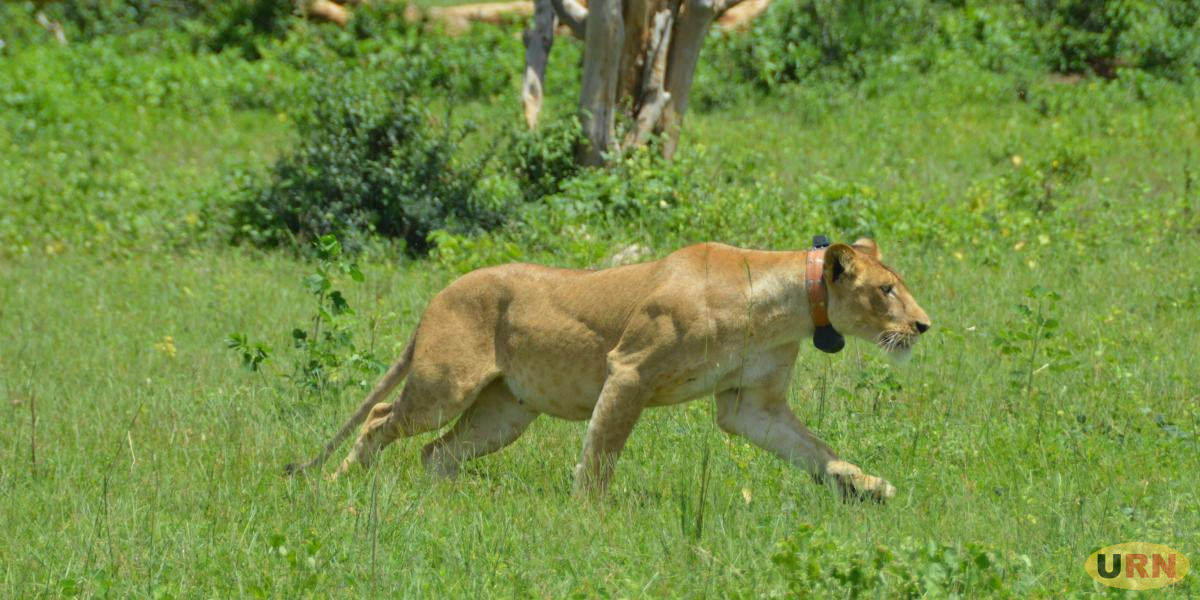
The lion population in Kidepo Valley National Park has fallen to five, raising fresh concern about the survival of one of Uganda’s most iconic predators. The Uganda Wildlife Authority (UWA) says the park’s lion population has declined sharply over the past decade, with poaching and other poorly understood factors believed to be contributing to the decline.
Dr Morris Enyel, the Chief Warden of Kidepo Valley National Park, told Uganda Radio Network that the decline became particularly evident over the past eight to 10 years. The latest estimate represents a significant drop from previous assessments. A study published in the Global Ecology and Conservation journal in December 2024 estimated that Kidepo Valley National Park had about 22 lions.
The sharp decline has prompted UWA to step up conservation measures under its 10-year Large Carnivore Conservation Action Plan for 2024-034, which targets lions, cheetahs and leopards. The plan seeks to address threats to large carnivores, maintain viable populations in their natural habitats, generate scientific data and strengthen long-term monitoring and conservation efforts.

As part of the interventions, UWA is planning to establish a lion breeding programme aimed at rebuilding the population in Kidepo. Dr Enyel said the programme is part of efforts to restore the species’ population and strengthen the wildlife richness of the Kidepo landscape.
He said the breeding and eventual reintroduction of lions would form part of wider efforts to restore ecological balance in the Kidepo conservation area while enhancing the park’s tourism potential.
Of the five lions currently estimated to remain in the park, UWA has collared only one. The tracking device allows rangers to monitor its movements, including movements between Kidepo Valley National Park and neighbouring South Sudan.
The planned restoration of Kidepo’s wildlife extends beyond lions, with UWA also pursuing the reintroduction of the Eastern Black Rhino, a species that disappeared from the area decades ago.
Dr Enyel said the last known indigenous Eastern Black Rhino in Kidepo was killed in Narus Valley after years of poaching and increasing human activity. “We used to have rhinos, Eastern Black Rhinos, that were roaming here in this landscape. And then due to the poaching pressures and other things, I think in the last 40 years, that last one was killed in Kidepo, the Narus Valley. That was the last rhino seen alive,” he said.
The planned return of the Eastern Black Rhino follows the reintroduction of four Southern White Rhinos into Kidepo Valley National Park in May 2026 from Ziwa Rhino Sanctuary. Although Southern White Rhinos are not indigenous to Kidepo, UWA says their reintroduction is part of broader efforts to restore wildlife populations and strengthen the park’s ecological and tourism value.
Dr James Mucunguzi, the UWA Executive Director, said negotiations are already underway with neighbouring countries, particularly Kenya, to source Eastern Black Rhinos for reintroduction into Kidepo.
“Rhinos that got extinct are back. We have just brought the Southern White Rhino. We are now working in partnership with our neighbouring countries to bring back the indigenous Eastern Black Rhino that got extinct,” Dr Mucunguzi said. The wildlife restoration efforts are being undertaken alongside the newly launched Kidepo Landscape Integrated Conservation and Development Project (KLICDP), a five-year initiative aimed at strengthening biodiversity conservation and improving ecological conditions across the Kidepo landscape.
The project was launched in Kitgum Municipality last week and is expected to support efforts to address threats to wildlife, improve habitat conditions and promote coexistence between communities and wildlife. UWA conservation data also points to declining lion populations in some of Uganda’s protected areas. Population studies and surveys conducted between 2018 and 2023 estimated that Kidepo Valley National Park had 12 lions and Queen Elizabeth National Park 39, while Murchison Falls National Park had an estimated 240 lions-URN. Give us feedback on this story through our email: kamwokyatimes@gmail.com