Most candidates in the Parish Women Council elections in Luwero District have been elected unopposed, with voting taking place in only four of the district’s 101 parishes. The Electoral Commission is conducting the Parish Women Council elections nationwide today, Friday, August 7, as part of the ongoing Special Interest Groups (SIGs) electoral roadmap. Each Parish Women Council comprises five elective positions: Chairperson, Vice Chairperson, General Secretary, Treasurer and Publicity Secretary.
In Luwero District, the Electoral Commission nominated 552 women to contest for 505 positions across the 101 parishes. Of these, 456 candidates were sponsored by the National Resistance Movement (NRM), 88 stood as independents, while eight represented the National Unity Platform (NUP).
However, despite the large number of candidates, voting was only held in four parishes after candidates in the remaining 97 parishes were declared unopposed. Luwero District Returning Officer Moses Rwanks Kiconco said elections were conducted in one parish in Wobulenzi Town Council, two parishes in Ndejje Town Council, and one parish in Busiika Town Council.

He explained that even in the few parishes where voting took place, competition was minimal because some candidates withdrew after negotiations and consensus-building, leaving fewer than three of the five available positions contested.
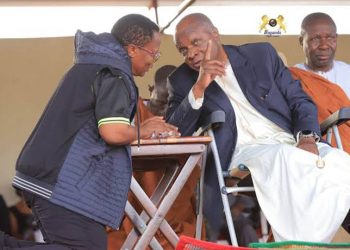
Luwero District Vice Chairperson Viola Nanteza attributed the high number of unopposed candidates to the NRM’s mobilisation strategy, saying the party fielded candidates for all available positions and encouraged consensus among aspirants instead of competitive contests.
According to Nanteza, the consensus approach enabled many candidates to secure victory without going through the ballot. However, Luwero District Chairperson Erastus Kibirango, a member of the opposition, disputed the outcome, alleging that the earlier Local Council I (LC I) and Village Women Council elections were marred by irregularities that disadvantaged opposition candidates and paved the way for the NRM’s dominance in subsequent elections.
Kibirango argued that the Women Council elections are conducted through an electoral college system, meaning success at higher levels depends largely on the composition of delegates elected from lower structures.
“Since this is an electoral college, it is difficult to win any seat if you do not have voters from the lower structures who were elected on your party ticket. After our candidates were rigged out in the village elections, we lost interest in the subsequent elections,” Kibirango said.
The Parish Women Council elections form part of Uganda’s Special Interest Groups electoral process, where elected representatives at one level constitute the electoral college that chooses leaders at the next level, from parish to sub-county, district and eventually the national level.
Meanwhile, the Electoral Commission has acknowledged that public awareness of the Women Councils and Committees elections has been low. In a circular dated August 5 and addressed to District and Regional Election Officers, the Commission’s Head of Field Operations, Diana N. Tumusiime Kateeba, directed election officials to intensify mobilisation ahead of the remaining stages of the electoral programme.
“The Commission has observed that publicity in the Women Councils and Committees Elections has generally been low-key. You are accordingly urged to intensify mobilisation and publicity for the remaining key activities, especially nomination, display of Women’s Registers, and polling, from parish to district level,” Kateeba wrote.
She further instructed election officials to work closely with local leaders, radio stations and community structures to raise public awareness, ensure Women’s Registers are properly displayed, and promptly report voter turnout. The next phase of the electoral process will be the Sub-county Women Council elections, scheduled for August 18-URN. Give us feedback on this story through our email: kamwokyatimes@gmail.com