As public debate intensifies over the rising cost of the Busega-Mpigi Expressway, senior engineers at the Ministry of Works and Transport have defended the project’s redesign, insisting the changes reflect the transition from an outdated concept to a modern, resilient expressway designed to meet current and future transport needs.
The expressway, a flagship project intended to ease chronic congestion along the Masaka Road corridor and improve connectivity between Kampala and southwestern Uganda, has come under scrutiny amid claims of irregularities and escalating costs. However, engineers familiar with the project say much of the criticism stems from a limited understanding of the project’s technical evolution and the reasons behind the redesign.
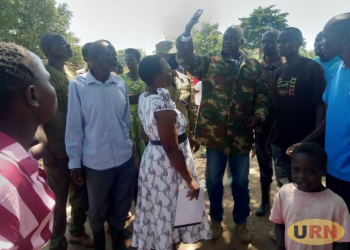
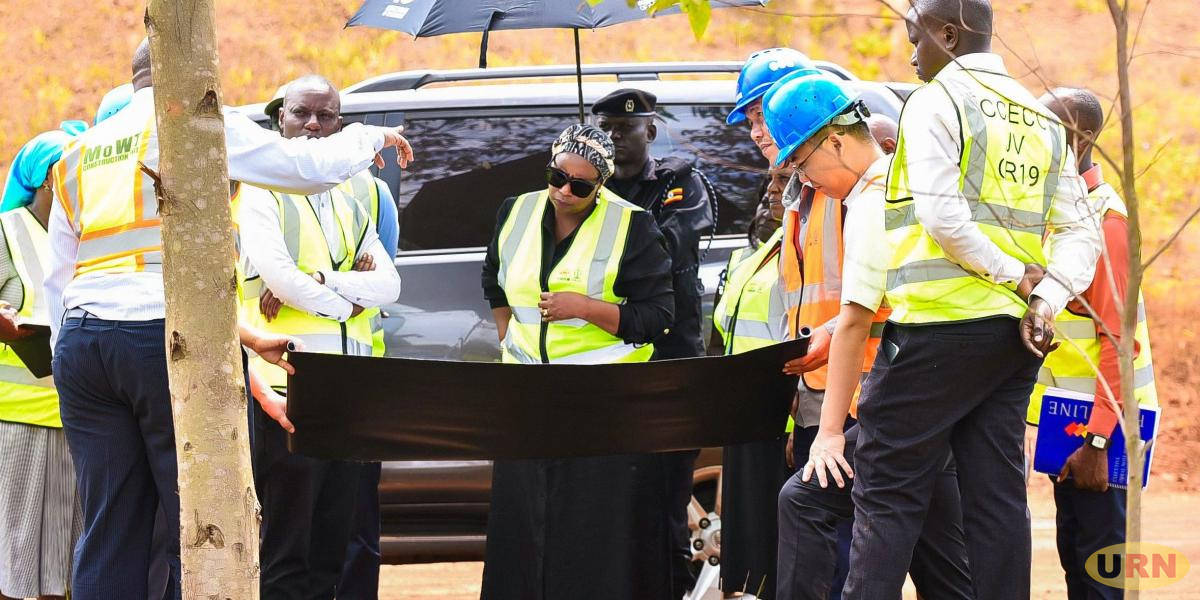
“A lot of what is being said is not true. Those saying these things are just playing to the gallery, but everything on this project is well documented,” one senior engineer told journalists. On Monday, a team of engineers accompanied the Inspector General of Government (IGG) on a detailed site visit, walking through sections of the alignment, structures and wetlands to explain the design modifications firsthand. The visit formed part of the ministry’s efforts to promote transparency at a time when public confidence in major infrastructure projects remains under scrutiny.

The Busega-Mpigi Expressway was first conceived around 2010 under the then Uganda National Roads Authority (UNRA). According to Eng. Godfrey Bihemaiso, Assistant Commissioner for Road Construction and Rehabilitation at the Ministry of Works and Transport, the original concept differed significantly from the project now being implemented.
“The first design was more or less like the first phase of the Northern Bypass, if you remember it,” Bihemaiso said during the site visit. “It was not even intended to be tolled by design. There were no flyovers, no interchanges, no link roads and several other features.”
Records obtained by URN show that the original design was approved by financiers in 2016 at an estimated cost of Shs547.543 billion. However, a subsequent appraisal by the development partner found that the design fell short of contemporary safety, capacity and environmental standards. The redesign was subsequently assigned to a joint venture of DOHWA Engineering, IDCG and TB3 Global Limited.
The revised design introduced major enhancements, including new interchanges at Nabbingo, Maya and Mpigi, compared to only one interchange in the original design. It also added approximately 16.7 kilometres of link roads serving Kyengera, Katende, Bujjuko, Lungala and Mpigi. The project scope was further expanded to include 4.59 kilometres of service roads that were absent from the original plan.
The highway was upgraded from a two-lane to a four-lane carriageway, while the alignment was extended by more than three kilometres beyond Mpigi (Kubikondo) towards Kalagala to provide a smoother connection to the existing Masaka Road. To improve drainage across extensive wetlands, the revised design incorporated seven additional bridges, 76 box culverts and lined drains, significantly enhancing flood resilience.
The project also introduced tolling infrastructure, including four toll plazas, while ensuring full compliance with expressway standards for vertical gradients and stopping sight distances. According to documents obtained by URN, the redesign substantially increased the volume of works. Common excavation increased from 390,375 cubic metres to 2,172,877 cubic metres.
Swamp excavation rose from 101,472 cubic metres to 1,597,127 cubic metres, while dumped rock required for the pioneer layer increased from 180,000 tonnes to nearly four million tonnes. Engineers say these increases, coupled with the need to source construction materials from more distant locations, inevitably raised both unit rates and the overall project cost.
One of the most significant changes involved rerouting sections of the expressway to minimise community severance and avoid conflicts with the planned Standard Gauge Railway (SGR) corridor. Isaac Ssekubunga, the contract manager for the Busega-Mpigi Expressway, said the original alignment would have divided several trading centres and created isolated strips of land, commonly referred to as “ghost islands”, between the expressway and the SGR corridor.
Land compensation has also attracted significant public attention, with reports indicating that approximately Shs118 billion will be paid to 4,222 project-affected persons (PAPs) across a 591.8-acre corridor. Critics have questioned why compensation costs are substantial despite long sections of the project passing through wetlands.
Ivan Kimera, a land officer at the Ministry of Works and Transport, explained that development partners require strict compliance with international social safeguard standards. He said comprehensive social impact assessments require compensation not only for land ownership but also for livelihoods disrupted by the project, including people occupying wetlands, regardless of the legal status of their occupancy.
During the site visit, Inspector General of Government Justice Aisha Nalule Bitala raised concerns over allegations that compensation had been paid under both the original and revised road alignments. Engineers dismissed the claims, insisting that no compensation had been paid along the abandoned alignment. Kimera described the allegations as one of several misconceptions surrounding the project. “No person was compensated along the old design line,” he said.
Engineers noted that the challenges affecting the Busega-Mpigi Expressway are not unique. They referred to an earlier report by Parliament’s Committee on National Economy, in which then Deputy Chairperson Robert Migadde observed that government had signed the original contract before completing detailed engineering designs, creating conditions for cost increases once comprehensive designs were prepared.
They maintain that although the revised design is more expensive, it offers better value for money through improved safety, durability and integration with other national infrastructure projects, including the Standard Gauge Railway. According to the engineers, every modification was supported by technical studies, documented justifications and approvals by both government and development partners.
They also dismissed allegations that the revised project cost of approximately Shs1.3 trillion was determined solely by the contractor, a joint venture of China Civil Engineering Construction Corporation and China Railway 19th Bureau Group (Uganda) Ltd. Instead, they said the revised cost underwent several stages of review involving independent consultants, the Ministry of Works and Transport and the project’s financiers before approval.
Bihemaiso said the final project cost has not yet been determined because negotiations between government, the contractor and the funder are still ongoing. He said the contractor had submitted 11 claims, which the financier is currently reviewing in an effort to reduce the overall project cost. “There are still negotiations going on. The contractor raised 11 claims, but the bank wants them to drop some of the claims and reduce the cost slightly. There is a process currently underway,” Bihemaiso said.
The Busega-Mpigi Expressway is currently under investigation by the Inspector General of Government and other government agencies over concerns about cost escalation, design changes and project management. The investigations followed a directive from President Yoweri Museveni to the IGG after concerns were raised about the rising project cost, alleged unauthorised changes to the road alignment and their impact on compensation claims.
The 23.7-kilometre expressway, largely financed through loans from the African Development Bank, was originally contracted in 2016 at approximately Shs547.5 billion based on preliminary designs. The estimated cost has since increased to about Shs1.3 trillion, prompting concerns over possible mismanagement and corruption. With support from State House forensic auditors, the IGG is examining procurement processes, design modifications, compensation payments and financial management. Several engineers involved in the project have already been questioned, while some officials have been suspended as investigations continue-URN. Give us feedback on this story through our email: kamwokyatimes@gmail.com