Parliament has called for a review of Uganda’s Government Undergraduate Sponsorship Programme. Members of Parliament are arguing that the current system no longer reflects the country’s population growth, rising university enrolment and persistent inequalities between urban and rural schools.
In a resolution passed on Tuesday, legislators urged the government to increase the number of university places allocated under the District Quota Scheme, saying it is one of the few mechanisms available to help academically qualified students from disadvantaged communities access higher education.
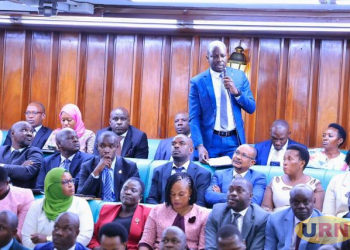
The motion, moved by Bardege-Layibi Division MP Martin Ojara Mapenduzi and adopted during a sitting chaired by Deputy Speaker Thomas Tayebwa.

The legislators recommended that the Ministry of Education and Sports review the sponsorship programme beginning in the 2026/2027 financial year and report back to Parliament.
The motions followed concerns on whether the government sponsorship programme has kept pace with the country’s changing demographics.
Mapenduzi noted that the government has maintained 4,000 undergraduate sponsorships annually since 2004, despite Uganda’s population growing from about 27 million to more than 50 million over the same period.
He also pointed out that the number of students sitting the Uganda Advanced Certificate of Education (UACE) examinations has almost tripled, from about 59,000 in 2004 to more than 165,000 last year, placing increasing pressure on the limited number of government scholarships.
Government currently allocates the sponsorships under four categories: 3,000 places through the National Merit Scheme, 896 through the District Quota Scheme, 40 under the Sports Scheme and 64 for students with special needs.
The District Quota Scheme was introduced in 2004 to improve access to higher education for students from underserved districts who often compete at a disadvantage because of disparities in school infrastructure, staffing and learning resources.
However, Mapenduzi argued that the number of quota places has remained largely unchanged despite growing demand.
He said students from rural schools continue to struggle against learners from better-resourced urban schools where academic performance is generally stronger, making a predominantly merit-based sponsorship system inequitable.
The proposal attracted support from lawmakers across party lines. Dodoth West MP Ben Baatom Koryang argued that educational achievement is closely linked to the quality of schools students attend rather than individual ability alone.
He said increasing district quota admissions would help produce more professionals from historically underserved districts, many of whom are more likely to return and work in their communities.
Arua District Woman MP Lilian Paparu Obiale said many students from poor households attain university entry qualifications but fail to enrol because their families cannot afford private sponsorship.
Lawmakers also raised concerns that newly created cities continue sharing district quota allocations with their parent districts, reducing opportunities for students from predominantly rural areas.
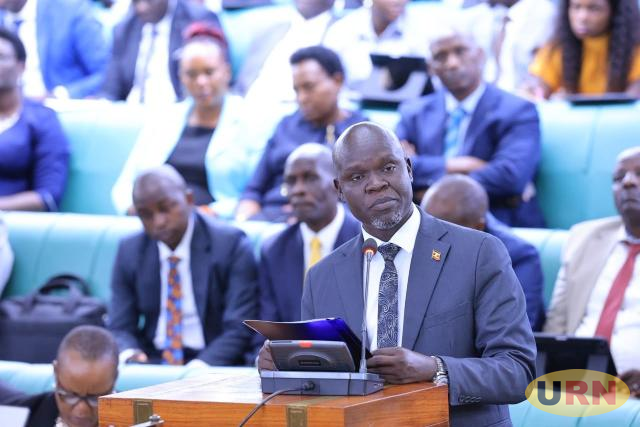
Responding on behalf of the government, Acting Education Minister Dr. John Chrysostom Muyingo acknowledged growing pressure on the sponsorship programme but cautioned that increasing government-funded university places would require additional resources.
He also clarified that more students are now benefiting from district-based admissions through reforms introduced under the Higher Education Student Financing Act, 2024.
According to Muyingo, of the 2,048 beneficiaries admitted under the Higher Education Student Financing Scheme this academic year, 1,228 were admitted through the District Quota System.
He said the Ministry of Education is already reviewing university admissions and the operation of the quota scheme to determine whether it remains appropriate in light of Uganda’s changing educational and demographic realities.
Parliament subsequently amended the motion to require that the review also considers the Sports and Special Needs admission schemes before adopting the resolution.
While the resolution is not legally binding, it signals growing political pressure on government to reform a sponsorship system that many lawmakers believe no longer reflects Uganda’s population, educational expansion and commitment to equitable access to higher education-URN. Give us feedback on this story through our email: kamwokyatimes@gmail.com