The Judicial Service Commission (JSC) has unveiled a raft of reforms aimed at strengthening transparency, accountability and merit-based recruitment in the justice sector, as it seeks to improve public confidence in the Judiciary and prepare for an expanding constitutional mandate.
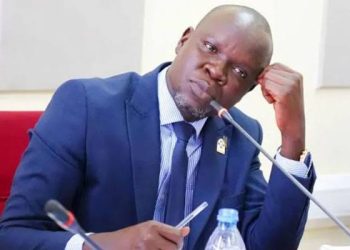
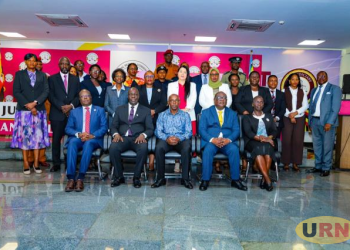
Speaking at the Stakeholders Forum in Kampala where they have launched the Commission’s Strategic Plan III, Client’s Charter and other policy documents at the Supreme Court on Friday, JSC Chairperson Dr. Douglas Singiza said the Commission had spent the past 15 months implementing internal reforms that prioritize efficient recruitment, faster disciplinary processes and technological innovation.
Singiza said the Seventh Judicial Service Commission had shifted from treating all its constitutional mandates as equal priorities to focusing resources on activities that are essential to delivering its core mandate. According to him, the new strategic approach is expected to improve efficiency while reducing wastage of public resources.

He said one of the Commission’s major achievements has been successfully processing recommendations for the appointment of the country’s top four judicial administrators, including the Chief Justice, Deputy Chief Justice, Principal Judge and Chief Registrar. He noted that only one recommended name was returned during the appointment process, which he described as evidence of the Commission’s rigorous recruitment procedures that emphasize competence, integrity and experience. The Commission has also appointed a record number of judicial officers and support staff while introducing measures to ensure that appointments reflect Uganda’s diversity as required by the Constitution.
Among the new reforms is a locally developed diversity-mapping system that will monitor representation across the Judiciary. Dr Singiza said the system, designed by the Commission’s in-house information technology team at minimal cost, is expected to support fair and inclusive recruitment decisions.
He also revealed that the Commission is working with the Judiciary to develop an electronic recruitment platform that will be integrated into the Electronic Court Case Management Information System (ECCMIS),enabling online recruitment processes at almost no additional cost.
On discipline and accountability, Singiza said the Commission overhauled its complaints handling system by placing it under the direct supervision of Deputy Chairperson Lady Justice Rosette Comfort Kania. He said the reforms had significantly reduced the time taken to investigate complaints, enabling the Commission to impose sanctions, including dismissals, demotions, reprimands and compensation orders where necessary.
The Commission has also introduced greater transparency in recruitment by publishing names of shortlisted applicants for aptitude and competency examinations on its website while giving unsuccessful applicants an opportunity to appeal.
Singiza said the Commission had adopted a collaborative approach with institutions including the Judiciary, Inspectorate of Government, Office of the Director of Public Prosecutions, State House Anti-Corruption Unit, Ministry of ICT and National Guidance, Ministry of Public Service, Uganda Human Rights Commission and the RDC Secretariat to improve efficiency and reduce operational costs.
He noted that the Commission’s responsibilities have continued to expand beyond judicial appointments to include recruitment for the Tax Appeals Tribunal, Electricity Tribunal, Leadership Code Tribunal, Insurance Tribunal and various Court Martial structures, increasing pressure on the institution.
According to Singiza, the expanded mandate requires urgent institutional restructuring supported by digital technologies to improve efficiency ahead of anticipated constitutional and legislative reforms expected later in the decade.
He said the Commission had equally strengthened its anti-corruption strategy by focusing not only on the integrity of judicial officers it recruits but also on ensuring high ethical standards within the Commission itself.
Singiza acknowledged the support he received from Chief Justice Dr. Flavian Zeija during his tenure as Principal Judge and from Head of Public Service Lucy Nakyobe when he assumed office, saying their guidance helped the Commission implement difficult but necessary reforms.
On his Part, Chief Justice Dr. Flavian Zeija welcomed the Commission’s new strategic direction, saying the theme, “Transforming the Judicial System through Merit, Accountability and Innovation,” reflects the Judiciary’s commitment to improving administration of justice.
He described the Judicial Service Commission as the critical link between the Judiciary and the public through its responsibility of recruiting judicial officers and handling public complaints against the Judiciary.
Zeija said merit-based, open and transparent recruitment strengthens public trust because citizens gain confidence that judicial officers are selected fairly.He said the Judiciary remains committed to accountability, noting that judicial authority is derived from the people of Uganda and must therefore be exercised responsibly.
While reporting progress in expanding court infrastructure and improving the operational capacity of courts and registries, he acknowledged that more work remains.
The Chief Justice has warned that the Judiciary would not tolerate laziness or misconduct and pledged full support for the Commission’s investigations into allegations against judicial officers.
He also announced that the Judiciary plans to publish performance information for individual judicial officers on its website topromote public accountability.
In addition, he said the Judiciary will work with the Commission to integrate performance evaluation technology, allowing the JSC access to judicial performance data that could inform promotions and career progression.
Attorney General Sam Mayanja used the occasion to call for reconciliation between the Judiciary and the Uganda Law Society, saying the ongoing disagreements between the two institutions are unhealthy for the country’s justice system.
Mayanja disclosed that his office had already written to the Chief Justice proposing a meeting involving the Judiciary and other stakeholders to find a solution to the impasse.
“This country belongs to all of us and we must move together as one,” he said, adding that efforts to restore harmony within the justice sector would begin soon. Judiciary and the Uganda Law Society have been at Loggerheads since the regime of the Chief Justice Emeritus Alfonse Owiny-Dollo Chigamoy who clashed with the current head of the bar Senior Counsel Isaac Ssemakadde over the insults he allegedly made against Constitutional Court Judge Musa Ssekaana-URN. Give us feedback on this story through our email: kamwokyatimes@gmail.com