Finance and investment experts have cautioned Ugandans against trusting blood relatives and investing in land as a keeper of value. They say instead that Ugandans are better off putting their savings in financial assets like unit trusts and stocks, if they want to ensure that their wealth lives long after the owner is gone.
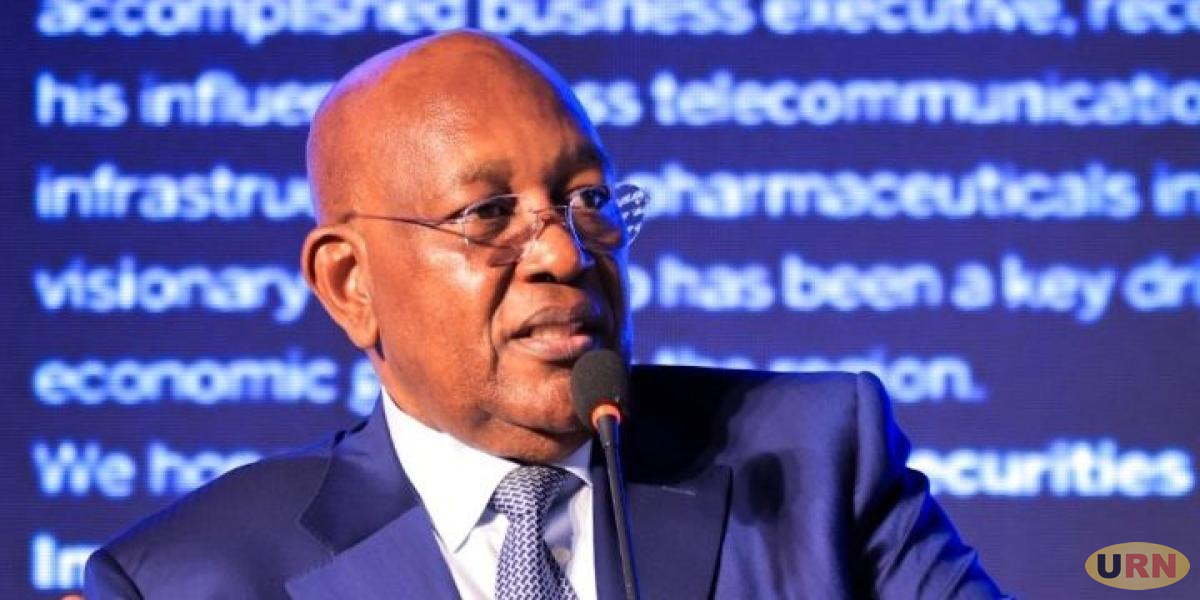
Charles Mbire, chairman of MTN Uganda, says that the two major problems of Ugandans are the love for land as a store of value for money and entrusting relatives more than professionals. This, he says, has led to Ugandan entrepreneurs failing to seamlessly transfer their wealth to the next generation, especially due to wrangles over land, as business management prowess is limited.
This kills family business sustainability. This comes as investment in physical assets is becoming one of the most vulnerable due to the geopolitical instability around the world, which has influenced rapid changes in the business environment.

He was speaking at the first Investors Day, organised by SBG Securities, a financial advisory and investment company. He gave examples where Ugandans have had opportunities, including when they inherited businesses of departing Asians in the early 1970s and those who benefited from the Departed Asians Properties after 1986, only to run them down a few years later due to a lack of managerial skills.
He hopes that the growing number of advisories and sources of information and knowledge will be taken as an advantage by today’s employed elites.
Unit trusts were launched in 2004 along with collective investment schemes when the Capital Markets Authority licensed the first operators following the passing of regulations. However, the market remained dormant, and by 2017, assets under management were valued at just 68 billion.
However, in 2020-2021, it experienced an explosion, with several fund managers and unit trusts being licensed by CMA, and as of March 2026, the total value of assets under management for collective investment schemes (unit trusts) reached 6.26 trillion shillings, up from 3.85 trillion shillings in December 2024. Analysts attribute this rapid growth to more awareness by Ugandans about a safer investment source. Mbire says there is still a need for a change of mindset by Ugandans to start putting their money where it will meaningfully grow.
Some Ugandans are still not aware of these opportunities and think that investment in financial markets is for the rich. Many unit trusts have set 100,000 shillings as the minimum investment one can make, which has tended to keep many away. However, others have launched products that require as low as 50,000 shillings.
The digital revolution is making things even more convenient. In April 2025, a partnership between mobile companies and a financial firm launched a product that allows mobile money starting at just 1,000 shillings. Pumla Nabacwa, a financial literacy coach at Bank of Uganda, says that this means investments should no longer be seen as a preserve of the rich.
Samuel Mwogeza, the Stanbic Bank Uganda Chief Executive Officer, says the changing environment is making investments in physical assets more risky. He gives the example of a factory operator who uses diesel as a major input, and how the Middle East conflict has affected them. He calls for diversity even in currencies where it is prudent to invest in different currencies.
On his part, Grace Semakula, Chief Executive of SBG Securities, says unit trusts are not only a source of capital for the nation, but also ensure the security of wealth. He says Ugandans need this if they want to transfer their wealth to the next generation when they are gone, while the financial market will help translate national growth to personal incomes.
There are also calls to diversify the products for financial investments, including the introduction of gold coins, as has been done in Ghana. This enables investors to get their savings or even sell off properties like land and store the value in gold coins, according to Mbire-URN. Give us feedback on this story through our email: kamwokyatimes@gmail.com