At Makerere University, the journey toward inclusive education is steadily gaining ground, thanks in part to the establishment of the Disability Support Centre, an initiative that is already reshaping the experiences of students with disabilities.
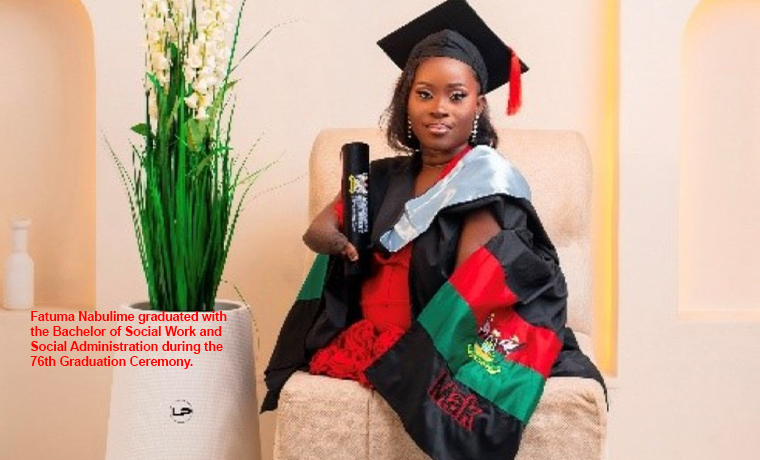
For Fatuma Nabulime, a recent graduate with a Bachelor’s Degree in Social Work, the centre represents more than just a physical space on campus, it is a symbol of dignity, access, and possibility.
“I was very excited when it was launched,” she recalls. “I knew it would help bridge the gap between students with disabilities and the university system.”

A Journey Marked by Resilience
Fatuma, who uses a wheelchair, joined Makerere University in 2022 under the disability scheme. Like many students with disabilities, her academic journey was defined by both determination and structural barriers.
While she describes her overall university experience as positive, thanks largely to supportive lecturers and peers, she is candid about the challenges that existed before the centre was established.
Accessing study materials, for instance, was often a struggle. “Sometimes we were required to buy printed notes from far places, and I didn’t always have the money,” she explains. “There was also limited access to assistive devices.”
Physical accessibility posed an even greater challenge. Some lecture rooms were located in buildings without ramps or functioning elevators. On several occasions, Fatuma had to be carried upstairs to attend lectures, a situation she describes as both inconvenient and humiliating.
A Turning Point for Inclusion
The introduction of the Disability Support Centre marked a turning point.
Today, students like Fatuma can access printed notes, use computers for research, and receive academic support tailored to their needs. For students with visual or hearing impairments, the centre provides assistive devices and services that were previously unavailable.
Beyond these practical interventions, the centre is also playing a crucial role as a bridge between students and academic staff.
“There are lecturers who may not fully understand how to support students with disabilities,” Fatuma notes. “The centre helps to mediate and create understanding.”
In one instance, when she faced challenges with her research project, staff from the centre intervened and engaged her supervisors to ensure she received the support she needed. “That really made a difference,” she says.
Changing Attitudes, Building Awareness
Equally important is the centre’s role in challenging misconceptions and raising awareness across the university community.
Fatuma points to an incident where a lecturer dismissed a sign language interpreter, unaware of the student’s needs. Such experiences, she says, highlight the continued need for sensitization.
“Awareness is improving, but more still needs to be done,” she emphasizes.
Despite these gaps, Fatuma acknowledges a growing culture of empathy among students. “Many students are supportive. Someone can offer you a seat or assist when needed,” she says, though she adds that occasional bias and misunderstanding still persist.
The Work Ahead
While the Disability Support Centre has made significant strides, Fatuma believes that true inclusion will require sustained effort.
She calls for improved physical infrastructure, ramps, elevators, and accessible buildings across campus, as well as continued awareness campaigns targeting both staff and students.
“The university needs to become fully accessible,” she says. “Not just in policy, but in practice.”
A Future Inspired by Inclusion
For Fatuma, the impact of the centre goes beyond her academic success. It has shaped her confidence and career aspirations.
“My university experience taught me how to overcome challenges and speak up for myself,” she reflects. “It inspired me to pursue social work so I can support others and advocate for inclusion.”
As she looks ahead, she hopes to work with communities and organizations that promote access to education and social services for people with disabilities.
A Centre That Changes Lives
The story of Fatuma is just one among many, but it captures the transformative potential of inclusive initiatives within higher education.
The Disability Support Centre at Makerere University is not merely addressing barriers, it is redefining what is possible for students with disabilities. By fostering access, dignity, and opportunity, it is ensuring that no student is left behind.
And for students like Fatuma, that change is already life-changing.
FACT FILE
- The centre was opened in July 2024 with support from MasterCard Foundation
- The University has 156 Students with disabilities
- The centre has received equipment worth Shs60m from the Endowment Fund/ Mak Run
- The university has received a bus from Kiira Motors to transport students with disabilities across the university
- Service provided by the centre include;
- Accessible Computers installed with Screen readers (JAWS AND FUSION)
- Braille Embossing
- Large Printing
- Access to refreshable braille displays
- Audio book reading etc. –Makerere University