

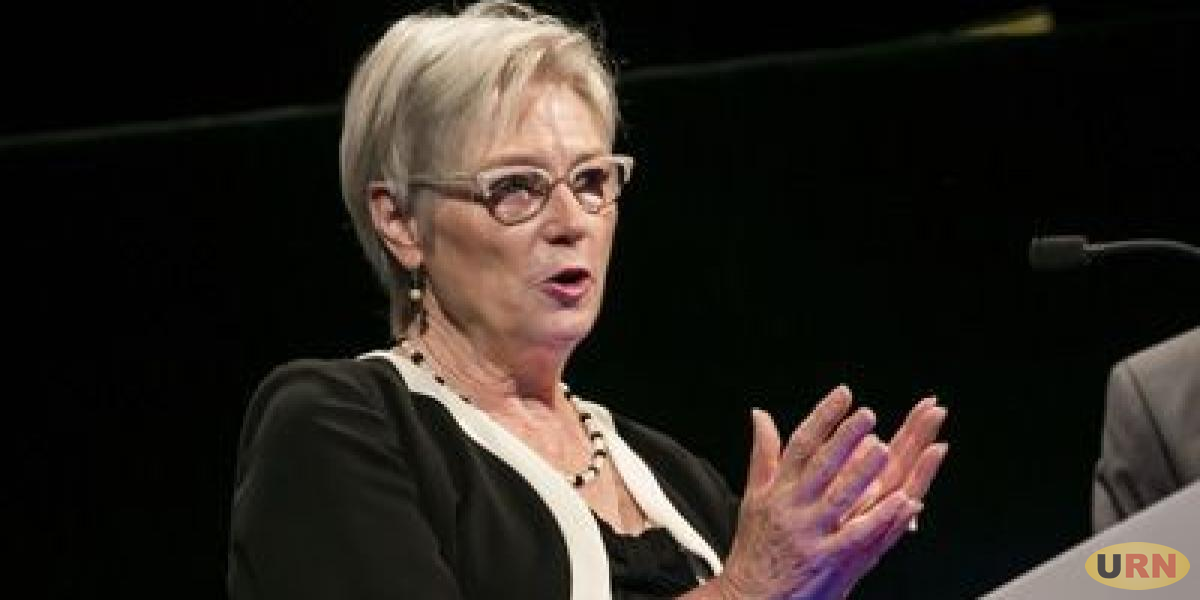
Maria van der Hoeven, former Executive Director of the International Energy Agency, has been elected Chair of the Extractive Industries Transparency Initiative (EITI) Board for the 2026–2029 term, taking over from former New Zealand Prime Minister Helen Clark.
Van der Hoeven was elected on Tuesday at the EITI Members’ Meeting in Brussels, as the global resource-transparency organisation begins a new leadership term amid major changes in the energy and critical minerals sectors.
Her appointment comes at an important time for Uganda, which joined the EITI in 2020 to strengthen transparency and accountability in the management of its oil, gas and mineral resources.

The Uganda Extractive Industries Transparency Initiative (UGEITI) is administered through a multi-stakeholder group bringing together government, companies and civil society. Its work includes publishing information on extractive-sector revenues, production, exports, contracts, beneficial ownership and the contribution of natural resources to the economy.
Uganda has now entered a fresh EITI Validation process, which assesses whether implementing countries are meeting the requirements of the EITI Standard.
The EITI International Secretariat began Uganda’s latest Validation on October 1, 2026, under the 2023 EITI Standard. The assessment will examine Uganda’s progress since its previous Validation, including stakeholder participation, transparency and the impact of EITI implementation.
The Secretariat has invited views from Ugandan stakeholders as part of the process. The review comes just months after UGEITI published its latest EITI Report covering the financial year 2023/2024, which covers Uganda’s extractive sector from July 2023 to June 2024.
The report will therefore form part of the body of information available to the EITI process as Uganda’s compliance with the international transparency standard is assessed.
This will be the second major international assessment of Uganda’s EITI implementation. In its first Validation, completed in 2024, Uganda scored 78.5 points, classified as a moderate level of progress under the then applicable 2019 EITI Standard.
That assessment identified areas requiring improvement, including gaps in mineral production data and weaknesses in the reporting of mineral exports.
The EITI Secretariat specifically highlighted inconsistencies in gold export figures reported by different government agencies and called for better information on informal mineral production and exports.
The latest Validation will therefore provide an opportunity to determine whether Uganda has addressed some of those weaknesses and whether its systems for disclosing information on the extractive sector have improved.
Van der Hoeven brings extensive experience in energy and public policy to the EITI Board. She previously served as the Netherlands Minister of Education, Culture and Science and Minister of Economic Affairs before heading the International Energy Agency.
She said the transformation of global energy and critical mineral systems makes transparency, accountability and inclusive dialogue increasingly important.
The new EITI Board brings together representatives of governments, companies and civil society and is responsible for overseeing the organisation’s strategic direction and implementation of the EITI Standard.
Helen Clark, who has chaired the Board since 2019, said she was proud of the progress made by the EITI community and wished Van der Hoeven well in her new role.
The leadership transition takes place as the EITI holds its 2026 Global Conference in Brussels under the theme “Transparency for shared prosperity.”
The Extractive Industries Transparency Initiative (EITI) is the global standard for transparency, accountability and good governance of oil, gas and mineral resources.
Its mission is to promote understanding of natural resource management, strengthen public and corporate governance and accountability, and provide the data to inform policymaking and multi-stakeholder dialogue in the extractive sector.
By implementing the EITI, 56 countries, including Uganda, commit to disclose information along the extractive industry value chain – from how extraction rights are awarded to how revenues are managed and benefit the public. Through participation, governments, companies and civil society agree to a common set of rules on what must be disclosed and when – the EITI Standard.
In each implementing country, a multi-stakeholder group oversees implementation, ensuring that transparency serves as an antidote to corruption and a foundation for citizens to realise sustainable benefits from their natural resources-URN. Give us feedback on this story through our email: kamwokyatimes@gmail.com